Urgent
George Berkeley's childhood home is on forced auction
Wednesday 8 July. Help us save Dysart Castle.
Read the appeal →
Page updated
This page has been recently updated — an urgent campaign has been added to help save Dysart Castle from a forced auction on
Wednesday, 8 July 2026.
Thomastown, Co. Kilkenny · Ireland
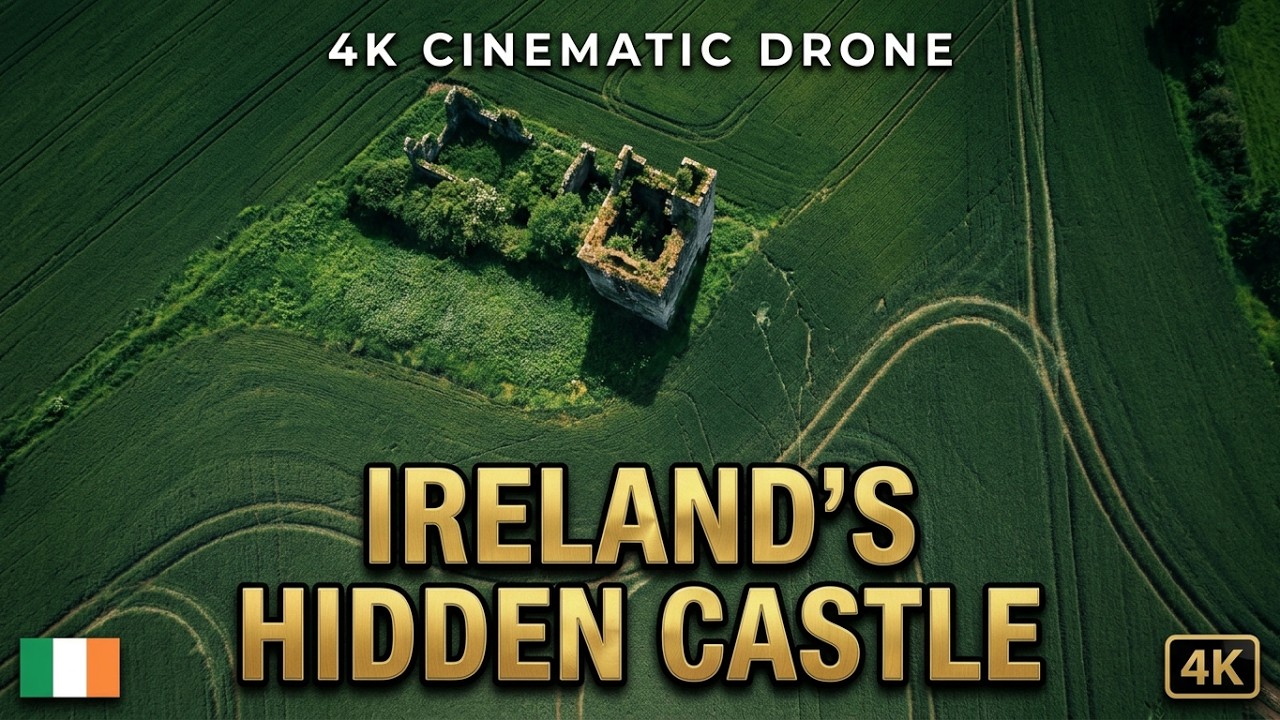
Dysart Castle.
The childhood home of the philosopher George Berkeley — namesake
of the University of California at Berkeley, of Berkeley College
at Yale, and of the city of Berkeley itself. A ruined tower-house
in the valley of the River Nore, surrounded by ancient Irish
woodland unchanged for thousands of years, and layered with
nearly a thousand years of Irish history.
Home of George Berkeley (b. 1685)UC Berkeley namesakeSt Colman monastic site
Dysart Castle — George Berkeley's childhood home — is being
forced to a distressed-debt auction on
Wednesday 8 July 2026, less than 48 hours from
now. A fund has resurrected an old debt the family had
understood to be closed and has refused to negotiate with us,
despite our best efforts. The site's custodian for nearly fifty
years, painter Ramie Leahy, is seriously ill.
Auction details
Wilsons Auctions · Wednesday 8 July 2026 at 2pm Irish time
Guide price €600,000 · approximately 103 acres (41.69 hectares)
Folio KK11532 · marketed as "agricultural land"
Reality check:
the site is being sold as agricultural land only, but 72% of that
land — including the castle itself — has no legal access other than
across lands still owned by Ramie Leahy. We expect the realistic
resolution figure to be very reduced compared to the guide price.
The family intends to register and bid at Wednesday's auction
— but without urgent help, we cannot guarantee
raising the funds in the receiver's accelerated timeframe.
We are seeking a partner willing to bid alongside us, and
welcome any suggestion on the appropriate financial vehicle,
safeguards, or ownership structure. To be clear, we are open
to immediate co-ownership of the castle with a shared-vision
partner alongside Ramie, and are the only party that can
facilitate the access required to achieve it. This is not a
request for a bailout — this is a request for partners in a
cultural venture to fulfil a long-held dream to save the
castle for future generations; one that has been precipitated
by an aggressive debt fund which will not negotiate. Any
conversation, introduction, or commitment is urgent and
welcome.
One castle. One philosopher. One long fight to keep them both standing.
Just outside Thomastown in County Kilkenny, a ruined tower-house
stands where the philosopher George Berkeley grew up — the man
whose name is carried today by the city of Berkeley, California,
and by the University of California at Berkeley. Ramie has been
the custodian of Dysart Castle since 1977. This is the story of
the fight to save it, and — this week — of the fight for its
survival.
The story
Berkeley of Kilkenny, and Berkeley of California.
George Berkeley was born in 1685 and raised on the grounds
of Dysart, in the shadow of the tower-house. He would grow
up to become one of the great philosophers of the English
language — Bishop of Cloyne, author of the doctrine of
immaterialism, and, at a certain point, a man who bought
farmland in Rhode Island convinced that the future of
learning belonged in the New World.
In 1866 the trustees of what was then the College of California
picked his name for their new university at the invitation of
his verses on "Planting Arts and Learning in America." The
city that grew up around the campus took the same name. A
thread from a Kilkenny childhood runs directly through the
heart of American higher education.
Ramie bought Dysart Castle and its surrounding farm in 1977,
when he was a young art teacher. In the decades since he has
become one of the country's leading amateur Berkeley scholars —
lecturing with the International Berkeley Society at
Rhode Island, where the philosopher lived in America.
The state today
Cracks in the walls. A race against time.
Dysart Castle is a private property, and the private
resources of a working painter only go so far. In April 2003
The Irish Times reported that Berkeley's childhood
home was "near collapse" — that new cracks had opened in
the walls and that structural failure was imminent without
urgent intervention.
Conservation work has been ongoing, funded piecemeal by
Kilkenny County Council (acting for the Department of the
Environment), the Royal Irish Academy, and Ramie himself.
Archaeological direction has been provided by Ben Murtagh —
Ireland's leading Berkeley archaeologist, whose credits
include the restoration of Kilkenny Castle and dozens of
other historic Irish buildings that have survived as a
result of his work.
But piecemeal isn't enough. The castle needs a proper
long-term settlement — one that gives it a purpose beyond
preservation, and gives the philosopher whose name it
carries a proper monument at home.
From the archive
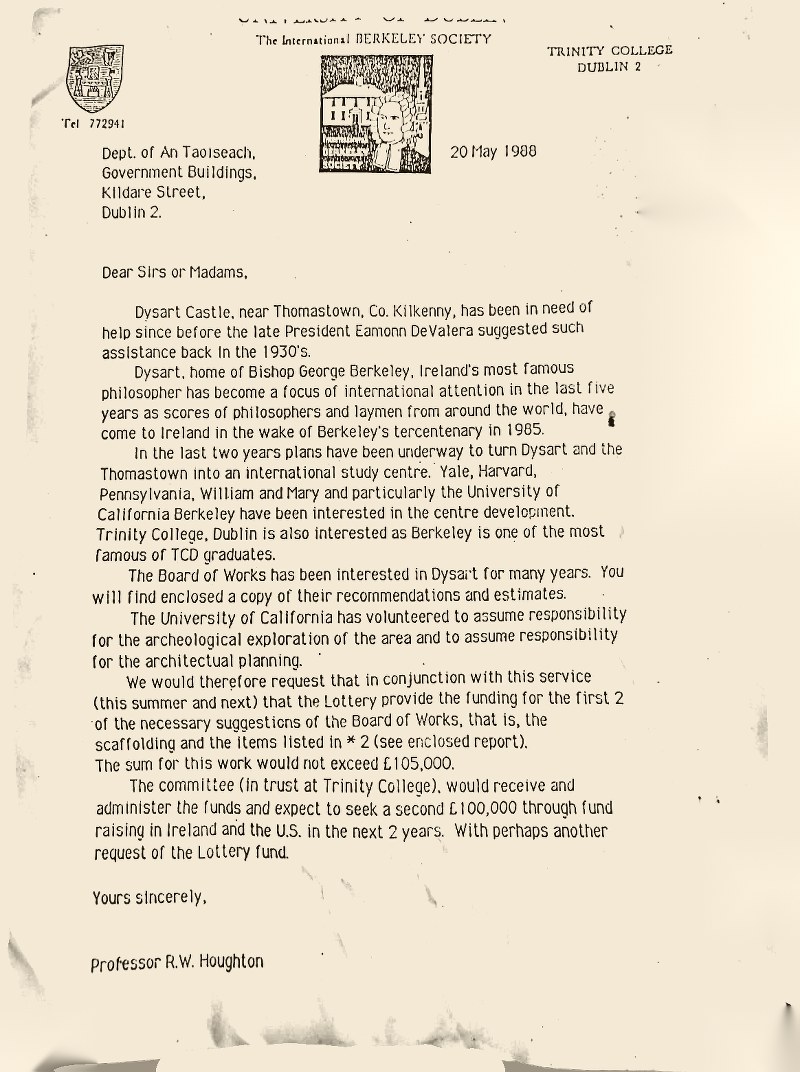
1988 · The First Appeal
Yale. Harvard. Pennsylvania. William and Mary. And particularly the University of California, Berkeley.
On the 20th of May 1988, Professor R.W. Houghton of the
International Berkeley Society at Trinity College Dublin
wrote to the Department of An Taoiseach on Ramie's behalf,
asking for £105,000 in Lottery funding to save the childhood
home of the philosopher who named half of California.
The letter names five universities that had by then already
expressed interest in developing Dysart into an international
study centre, and points out — beautifully — that this need
was known to Éamon de Valera in the 1930s. The campaign is
older than you might think.
"Dysart Castle, near Thomastown, Co. Kilkenny, has been in
need of help since before the late President Éamon de Valera
suggested such assistance back in the 1930s."
Opening paragraph, 20 May 1988
"Yale, Harvard, Pennsylvania, William and Mary and particularly
the University of California Berkeley have been interested
in the centre development."
On international university support
"The sum for this work would not exceed £105,000."
The ask, in 1988 pounds
The vision
A learning centre for Berkeley's philosophy — at Berkeley's own front door.
The ambition is to restore the castle and the adjacent Berkeley
House and turn the site into a library and study centre for the
philosophy of George Berkeley — the natural European counterpart
to the collections held at Yale (Berkeley left his books there),
at Trinity College Dublin's Berkeley Library, and at UC Berkeley
itself. A place where scholars, students and the merely curious
can come to think, in the landscape that shaped the thinker.
Ramie has been pushing this vision quietly for nearly half a
century — from a written appeal to the Taoiseach delivered by
John McGuinness TD, to a direct fundraising overture to the
City of Berkeley in California, to ongoing conversations with
the Heritage Council, the OPW, and UC Berkeley itself.
The campaign so far
1685
George Berkeley born
Raised on the grounds of Dysart, in the shadow of the tower-house.
1866
The University of California picks the name
Trustees name their new college after Berkeley, inspired by his verses on planting learning in America. The city takes the name too.
1977
Ramie becomes custodian
Buys the castle and surrounding farm as a young art teacher. Restoration begins.
1990s → 2000s
Fundraising and appeals
A £50,000 appeal to the City of Berkeley, California is unsuccessful; Ramie writes personally to the Taoiseach; John McGuinness TD carries the letter.
April 2003
"Near collapse" — the Irish Times sounds the alarm
New cracks in the walls; national coverage; further conservation funding secured with Kilkenny County Council.
2009
The Murtagh reporting
Ben Murtagh — Ireland's leading Berkeley archaeologist, whose credits include the restoration of Kilkenny Castle and dozens of other historic Irish buildings saved through his work — publishes a full excavation report on Dysart, funded by the Royal Irish Academy.
Aug 2014
George Berkeley Summer School — with a visit to Dysart
A two-day Berkeley Summer School in Thomastown, part of the Thomastown and Kilkenny Arts Festivals, with academic talks by Dr David Berman (TCD), Anthony McGrath, Brian Hamilton, and Tony Whittle of the Thomastown Berkeley Society — culminating in a picnic-lunch visit to Dysart Castle. View source →
May 2021
TCD seminar — Berkeley, Colonialism, and Ireland
TCD's Trinity Long Room Hub hosts George Berkeley, Colonialism, and Ireland: A Conversation with Tom Jones. Ramie corresponds with TCD PhD candidate Takaharu Oda in the weeks following and hosts him at Dysart — contributing local historical detail on Kilcrin, the Leabhar Breac reference, and the identity of "Colman of the pigs" that feeds into Oda's doctoral research. View source →
June 2022
"A Pragmatic Bishop" — TCD PhD thesis
Takaharu Oda submits his Trinity College Dublin PhD thesis on Berkeley's theory of causation in De Motu. It thanks Ramie in the Acknowledgements: "Lastly, in County Kilkenny, I thank Mr Leahy for Berkeleist talk in his immense wheat field, where the ruins of Dysart Castle, the bishop's birthplace, enthused me."View source →
Today
The next chapter
Ongoing campaign for the funding, partnerships and long-term settlement that turn the ruin into a working Berkeley study centre.
If you, or an institution you can speak for, might be able to help —
with bridge finance, a rapid commitment, an introduction, or the
longer-term proposition of co-ownership alongside Ramie —
please reach out through the
enquiry form
with "Dysart" in the message, or contact us directly at
enda.leahy@gmail.com.
The Story of Dysart
From St Colman to the University of California.
The site's history did not start with George Berkeley, and it does
not end with the campaign to save it. Nearly a thousand years of
Irish life have played out in this quiet valley of the River Nore.
Here is the longer story.
Long before the philosophers.
The ground on which Dysart Castle stands — a bend in the valley
of the River Nore, ringed by ancient woodland — has been a place of significance
since long before George Berkeley was born, or the tower-house itself
was built. Archaeological investigation — first carried out in 1989
in association with the University of California, Berkeley (team leader
Mark Hall, with Ben Murtagh of the Irish team), and later formalised
in Murtagh's Old Kilkenny Review paper — has identified four
distinct periods of activity at the site: an early-medieval monastic
settlement associated with St Colman (comprising a primary stone
church, a graveyard, cross slabs, Romanesque architectural fragments,
and the ruins of a round house); a medieval castle phase; a
post-medieval phase associated with the Berkeley family; and the
modern period.
The Berkeleys of Dysart.
In the seventeenth century the Berkeley family held the estate at
Dysart. It was here that George Berkeley was born in 1685 and spent
his childhood. He went on to Kilkenny College and then to Trinity
College Dublin, took holy orders, and eventually became Bishop of
Cloyne. His philosophical work — most famously his doctrine of
immaterialism — established him as one of the most consequential
figures in early modern philosophy in the English language.
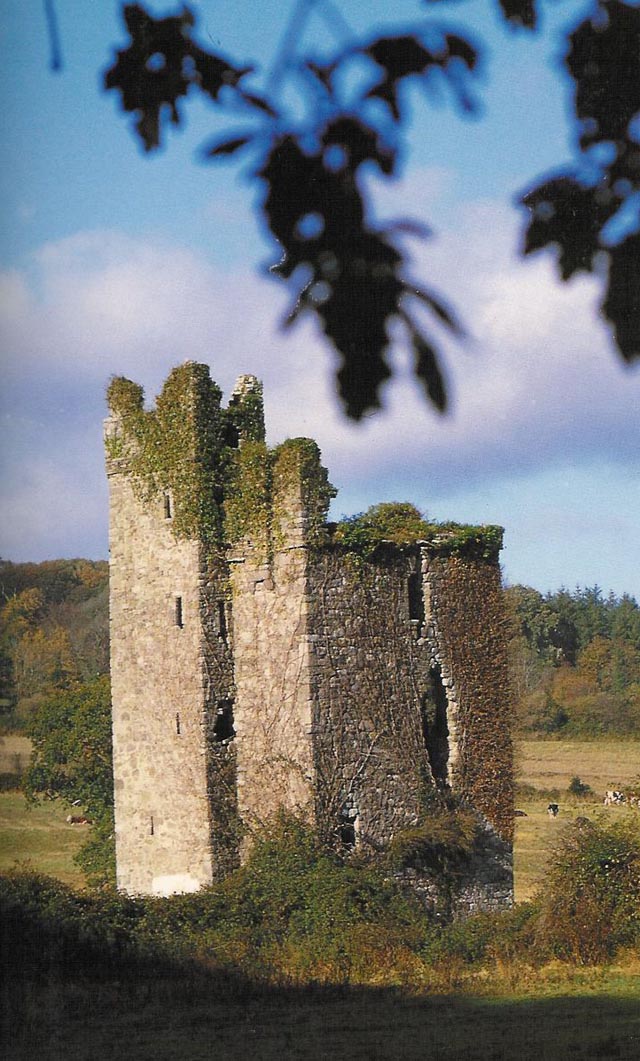
Dysart Castle, on the family lands above the River Nore.
America — and the founding of American higher education.
In 1725 Berkeley proposed founding a college in Bermuda to educate
the sons of colonists and Native Americans for the ministry. He
secured a royal warrant from King George I and a Parliamentary
promise of £20,000. He sailed for America in 1729. Blown off course,
he landed in Rhode Island and — while waiting for Parliament's
funds, which never came — built Whitehall in Middletown, RI: North
America's first Palladian-style house, and soon a centre of Newport
intellectual life that inspired the founding of the Redwood
Library.
Berkeley's most consequential act on the American continent, however,
was what he did when he left. Before sailing home to London in
1731, he made two donations that reshaped American higher education.
He gave Whitehall and the greater part of his personal library —
then one of the finest private libraries in the Anglophone world —
to Yale. That donation is why Yale today has both a
Berkeley College and a Berkeley
Divinity School. He also made an important gift of books
to Harvard. Both universities were, at the time, small colonial
institutions; Berkeley's donations profoundly expanded their
intellectual reach at the moment they most needed it. It is not
an overstatement to call him one of the founding donors of higher
education in America.
The California naming.
In 1866, at a meeting on a hillside above San Francisco Bay, the
trustees of what was then the College of California picked a name
for their new campus. They chose Berkeley, after the philosopher,
drawn by the closing line of his verses On the Prospect of
Planting Arts and Learning in America: "Westward the
course of empire takes its way." The city grew up around the
campus and took the same name. Neither had any direct historical
connection to this quiet corner of Kilkenny woodland. But the name that begins here
now belongs to one of the great centres of higher learning in the
world.
The long decline, and one man's custodianship.
After the Berkeleys, the estate passed through other hands and,
over the nineteenth and twentieth centuries, fell into decline.
The tower-house lost its roof. The land was farmed and let go, and
farmed again. In 1977, a young Kilkenny painter — then an art
teacher, later a co-founder of the Kilkenny Arts Festival and of
the Kilkenny Colourists — bought the castle and its surrounding
farm. Ramie Leahy has been its custodian ever since. Almost every
stone still standing on the site is standing because he chose to
keep it there.
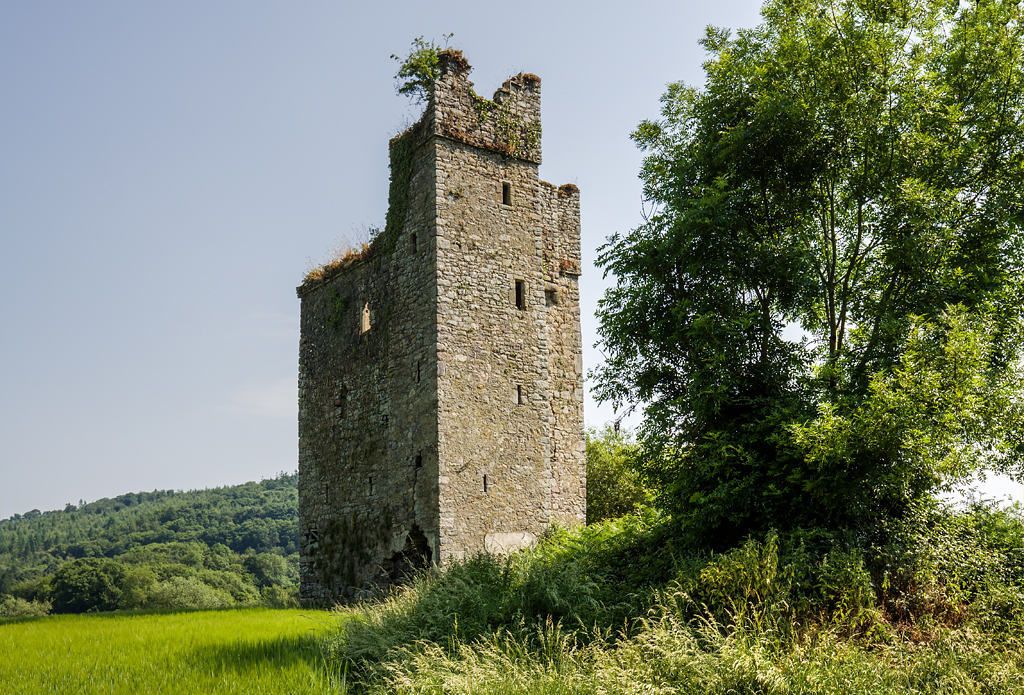
The tower-house today — three storeys of limestone masonry, still standing.
The campaign to save it.
The 1988 letter reproduced elsewhere on this page — from Professor
R.W. Houghton to the Irish Taoiseach — opens with the observation
that Dysart has been in need of state assistance since Éamon de
Valera flagged the same issue in the 1930s. In 1989 the UC Berkeley
team led the first proper archaeological excavation of the site.
In 2003 the Irish Times reported the castle was near
collapse. Conservation has continued in fits and starts, with
grants from Kilkenny County Council and, most of all, with Ramie's
own resources. Structural surveys by Phelim Manning (1999) and
David Kelly (2000), and the ongoing engineering supervision of
Ivor MacElveen, have kept the ruin from becoming a ruin of a ruin.
And now, in July 2026, the whole thing is at risk of being sold —
a distressed-debt fund has resurrected an old debt and forced the
property to auction on Wednesday 8 July. Full documentation follows
in the next section.
The Evidence
Correspondence, reports & source documents.
Every claim on this page is verifiable. Below are the primary
documents — original correspondence, structural and archaeological
reports, and press coverage — that back up what we say. If you're
being asked to consider something serious, you should be able to
check it. Here it is.
Kilkenny County Council grant applications, engineering
assessments from David Kelly and Ivor MacElveen, the Ben
Murtagh castle plans, the receiver's sale particulars, and
the family's correspondence with the receiver — all available
on request.
Prints are great for the sitting room. But if you're looking
to live with an original — or talk about a commission, or book
Ramie for an exhibition — drop a note here and we'll be in
touch within a couple of days.
Prices for originals range from €300 for a
small framed watercolour up to €4,000+ for
large oils. Works can be viewed by appointment in Kilkenny
or Dublin.
Collectors & curators: for catalogue enquiries,
provenance, or loan requests, please include "catalogue" in your
message.